Key Takeaways
A working vacation can be both practical and restorative when the cottage, schedule, and expectations are clear.
- Choose a quiet setting with dependable connectivity.
- Check the workspace, outlets, lighting, and mobile coverage before booking.
- Structure the day around focused work and genuine breaks.
- Use nearby outdoor spaces and local activities to make the stay feel like a getaway.
- Compare privacy, comfort, access, and total value across remote work vacation rentals.
Discover a calmer alternative to the traditional home office
Working from a holiday cottage changes more than your view. It creates a gentle separation from household routines and gives the working day a clearer beginning and end. With thoughtful planning, remote work vacation rentals can offer a useful middle ground between professional responsibility and a restorative change of scene.
How a peaceful setting can support focus and creativity
A quiet environment makes it easier to settle into demanding work without the constant visual reminders of chores, errands, and unfinished tasks. Natural surroundings can also give your mind a modest reset between calls or writing sessions. You may find that a slower setting supports fresh thinking, especially when the cottage offers a comfortable place to work and a separate area to relax.
The goal is not to make the stay feel like another office. It is to create enough calm for concentration while leaving room for the small observations and pauses that often help ideas develop.
Why a change of scenery can improve your work-life balance
At home, work can spread into every room and linger well beyond your planned finish time. A cottage gives the day a more visible frame: work happens in one place, while meals, walks, and evenings happen somewhere else. That physical distinction can make it easier to close the laptop and be present for the rest of the stay.
A new setting also encourages modest changes in rhythm. A morning walk, a slower lunch, or a few minutes outside after a meeting may be enough to break the feeling of one long, uninterrupted workday.
What makes a holiday cottage suitable for a working vacation
The best option is not necessarily the largest or most luxurious property. It is one with a quiet corner for work, reliable internet, practical power access, comfortable seating, and enough privacy for calls. A kitchen, laundry facilities, and a pleasant living area become especially valuable when you are staying for more than a few nights.
It helps to think of the cottage as a temporary base rather than a hotel room. In the Hérault countryside, a cycling and hiking basecamp can add an active dimension to the stay, provided your work commitments still leave time to enjoy it.
Set up a comfortable and productive workspace
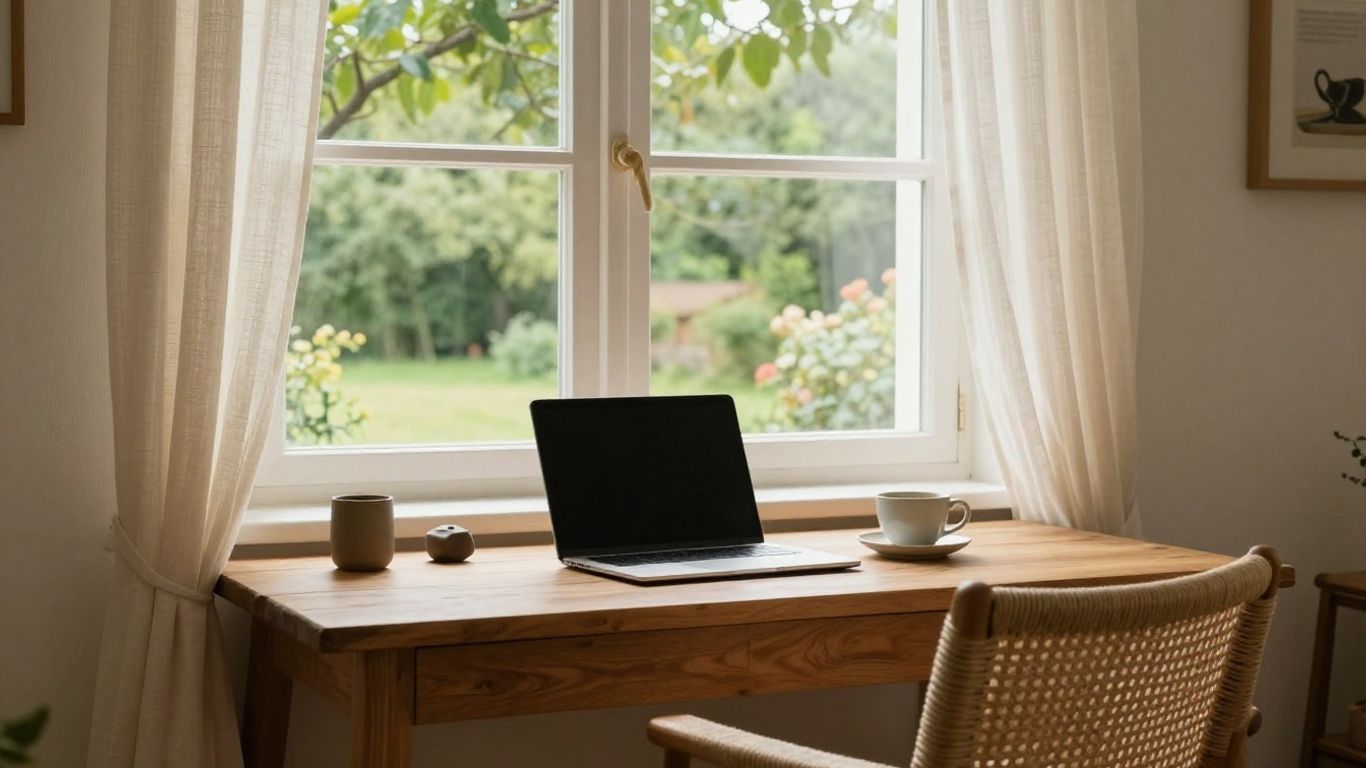
A good workspace does not need to look formal. It needs to support the way you actually work, from video meetings and concentrated tasks to short periods of reading or planning. Before unpacking, walk through the cottage and consider which room offers the best combination of light, quiet, stability, and separation from distractions.
Small adjustments often make a noticeable difference. Move a chair nearer a window, clear one surface completely, and keep chargers within reach so the setup feels intentional rather than improvised.
Choosing the right spot for video calls and focused work
For calls, choose a position with a simple background and enough distance from kitchens, entrances, and shared seating areas. Face a window if the light is gentle, but avoid placing the window directly behind you. For focused work, visual quiet matters almost as much as physical quiet, so a small desk in a less-used corner may be better than a central table.
If other guests will be present, agree on meeting times and quiet periods in advance. That simple conversation can prevent interruptions and makes the cottage more comfortable for everyone.
Making the most of reliable Wi-Fi, power, and natural light
Place your laptop where the signal is strongest, but do not assume the most attractive room has the best connection. Test the internet from the intended workspace before a busy meeting day, and keep a charged phone available as a backup for essential communication. Natural light is pleasant, though a small lamp remains useful for darker mornings and late sessions.
A power strip can simplify life when outlets are limited. It also keeps the desk less cluttered, particularly when you are charging a laptop, phone, headphones, and other equipment at once.
Creating an ergonomic setup with the available furniture
Cottage furniture may not be designed for a full workday, so adjust the arrangement rather than accepting discomfort. Raise your laptop with a stable stack of books if the screen is too low, use a separate keyboard when possible, and place both feet firmly on the floor. Your back, shoulders, and wrists will tell you quickly whether the position works.
Take short posture changes throughout the day instead of trying to find one perfect position. Alternating between sitting, standing at a counter, and walking during audio calls can make a temporary setup feel much more manageable.
Keeping work materials organized in a compact cottage
Choose one basket, drawer, or shelf for work items and return everything there at the end of the day. This keeps cables, notebooks, and adapters from spreading across the living space. It also makes packing easier when you move between rooms or prepare to leave.
Keep personal belongings separate from work materials wherever possible. A clear physical reset at the end of the afternoon helps the cottage remain a home for the evening rather than an office that happens to have a kitchen.
Enjoy the essentials remote workers need
A beautiful setting cannot compensate for missing practical details. Before booking, treat connectivity, workspace dimensions, and privacy as part of the accommodation itself. Listing photographs are helpful, but direct questions often reveal the information that matters most to a working guest.
This is particularly true for longer stays, when a minor inconvenience repeated every day can become surprisingly tiring.
Evaluating internet speed and network reliability before booking
Ask whether the connection is suitable for video calls, how the network performs during busy periods, and whether the router serves the whole property. If possible, request a recent speed test from the room where you expect to work. Reliability matters more than an impressive maximum number, since a brief interruption during a client call can be more disruptive than slower browsing.
You should also understand the backup plan. Mobile tethering may work well in one location and poorly in another, so do not rely on it without checking local coverage first.
Checking desk space, outlets, and mobile coverage
Ask for the actual dimensions of the desk or table, not simply confirmation that a workspace exists. Find out how many outlets are nearby and whether the chair has a backrest suitable for extended use. These details are easy to overlook when the listing focuses on views and bedrooms.
Check mobile coverage for your provider before arrival. A small amount of preparation can save you from moving equipment repeatedly or taking an important call outside.
Confirming practical amenities for longer stays
For a week or more, everyday conveniences have a greater effect on your energy. Confirm laundry access, kitchen equipment, heating or cooling, storage, and the availability of linens and basic supplies. You may also want to ask about parking or local transfers if you will arrive with work equipment.
Make a short personal checklist before contacting the host. It could include:
- A dependable internet connection
- A suitable table and supportive chair
- Enough outlets near the workspace
- Laundry and cooking facilities
These questions are not fussy. They help you compare properties on the things you will use repeatedly, rather than on appearance alone.
Understanding privacy and noise levels during working hours
Ask what surrounds the cottage and whether other guests, owners, roads, or shared outdoor areas are nearby. Find out about building work, local events, and normal daytime sounds during your planned dates. A rural setting may be peaceful without being completely silent, and knowing the likely noise level lets you plan meetings sensibly.
If privacy is a priority, clarify which spaces are exclusively yours. That answer can matter as much as the number of bedrooms, especially when you need to speak freely during professional calls.
Build a sustainable work routine during your stay
A working vacation feels balanced when work has a defined place in the day instead of quietly taking over. Start by identifying the hours when you are most alert and reserve them for tasks that need real concentration. Then leave enough space for meals, movement, and the pleasures that made you book the stay.
The routine should be firm enough to protect your time but flexible enough to suit the surroundings. A cottage is not a reason to recreate every minute of a normal office day.
Structuring your day around focused work periods
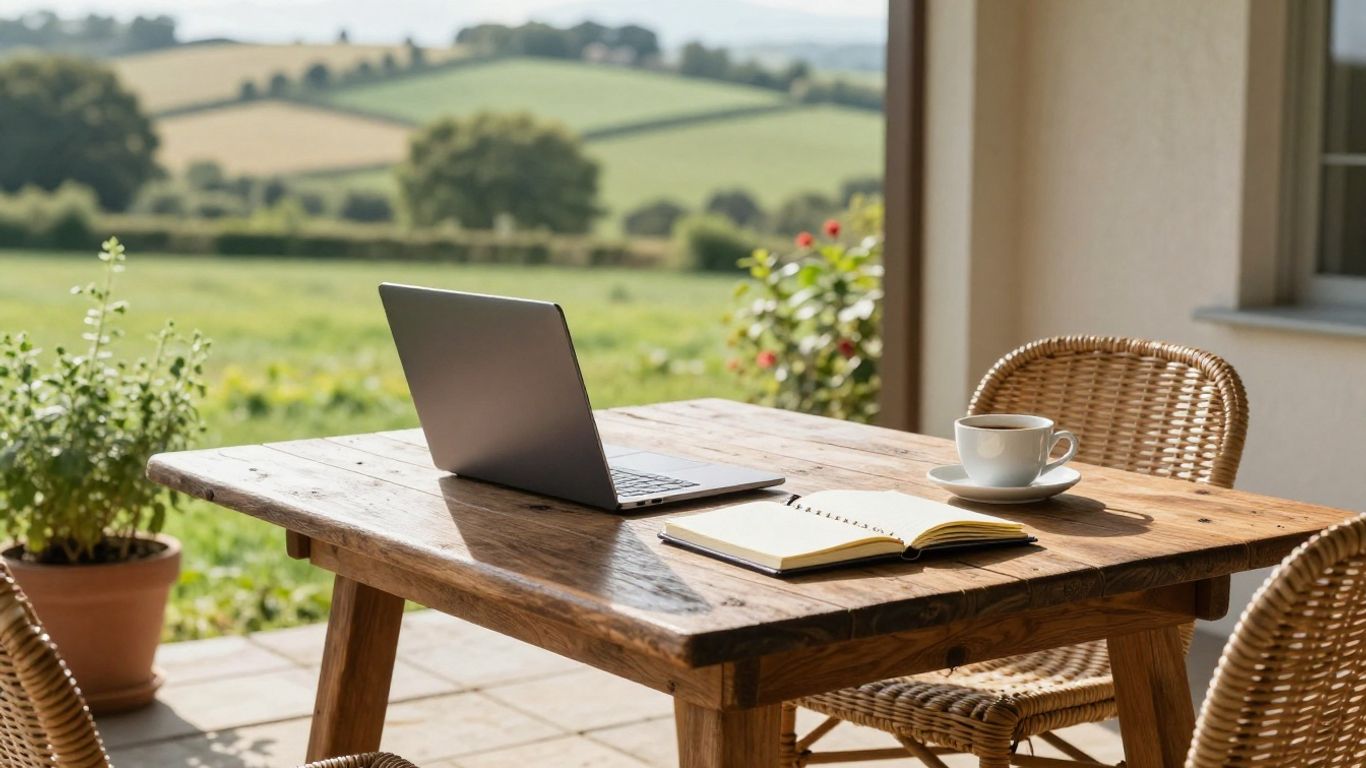
Group similar tasks together and protect one or two uninterrupted blocks for writing, analysis, or planning. Use shorter periods for email and administration, rather than allowing messages to interrupt every demanding task. A written finish time gives the workday a boundary that feels real.
If your schedule permits, reserve the first hour for deep work before checking messages. You may accomplish more while the property and surrounding area are still quiet.
Taking restorative breaks in the cottage surroundings
Breaks work best when they change your sensory environment. Step onto a terrace, walk to the end of the lane, prepare lunch without looking at a screen, or spend five minutes noticing the weather. These pauses do not need to become ambitious excursions; their value comes from interrupting the mental pattern of continuous work.
A short outdoor break between meetings can also help you return with more patience and attention. Keep comfortable shoes nearby so leaving the desk feels easy rather than like another task.
Setting boundaries between professional and personal time
Tell colleagues when you will be available, and avoid presenting the entire day as open simply because you are working remotely. At the end of your planned hours, close the laptop, put away work materials, and change rooms if you can. This small ritual signals that the personal part of the stay has begun.
Your companions may also need clarity. Agree on when you need quiet and when you are free to join a meal, outing, or conversation.
Planning for meetings across different time zones
Time-zone differences can make an otherwise calm stay feel fragmented. Put every meeting into the local time as soon as it is scheduled, then look for clusters rather than scattering calls across the whole day. Protect sleep and meals, especially when early or late meetings are unavoidable.
Before an unusual-hour call, check the lighting, background, and connection from the chosen room. A little preparation keeps the meeting from spilling into the rest of the evening.
Combine productive work with a memorable cottage experience
A working vacation should still feel like a vacation. The most enjoyable stays leave room for small discoveries rather than filling every free hour with plans. Once work is contained, the local area becomes an easy source of variety, whether you prefer active mornings, quiet afternoons, or unhurried meals.
The experience can be simple. You do not need a packed itinerary to feel that you have gone somewhere.
Exploring the local area before or after your workday
Use the edges of the day for activities that do not require complicated logistics. A visit to a nearby village, a market stop, or a short scenic drive can provide a clear contrast to your screen-based hours. If you have more time, plan a longer outing for the weekend rather than trying to fit it between meetings.
Ask locally for routes and seasonal suggestions. A recommendation from a host may lead you to a quieter place than the most obvious attraction.
Using outdoor spaces to recharge between tasks
A private garden, terrace, or shaded area can become a useful transition point between work blocks. Take your coffee outside, read a few pages, or simply sit without trying to be productive. The change in temperature, sound, and light can make a short break feel more substantial.
At Maison Mia Majorelle, the heated pool and surrounding countryside offer options for unwinding when the working day allows it. Keep these pauses genuinely restorative rather than turning them into another item to document or schedule.
Planning low-effort activities for evenings and weekends
After a full workday, choose activities that are pleasant without being demanding. Cook with local ingredients, take an easy walk, visit a small gallery, or linger over dinner. For a weekend, one well-chosen excursion is often more enjoyable than several tightly timed reservations.
Leave some space for spontaneity. A slower plan gives you room to respond to the weather, your energy, and whatever catches your attention locally.
Making the stay comfortable for couples, families, or solo travelers
Different groups need different forms of separation. Couples may appreciate a quiet corner for simultaneous work, families may need a clear agreement about call times, and solo travelers may value a comfortable living area for changing out of work mode. Discuss these needs before arrival rather than trying to solve them once everyone is tired.
The cottage should support shared time without requiring constant togetherness. A little privacy often makes the time you spend together more relaxed.
Choose the right option among remote work vacation rentals
Choosing among remote work vacation rentals requires more than comparing nightly prices. Consider how the property will function on an ordinary Tuesday, when you may have calls, cooking, errands, and a deadline. The right choice brings together dependable basics and a setting you will genuinely enjoy after work.
Read the listing carefully, then ask targeted questions. Clear answers before booking are usually a better sign than attractive language that leaves practical details vague.
Comparing location, accessibility, and length of stay
Think about travel time, transport options, grocery access, and how easily you can reach activities or services. A remote cottage may be ideal for uninterrupted focus, while a more accessible location can be easier for longer stays or changing plans. Length also matters: a property that suits three nights may feel less convenient after two weeks.
Maison Mia Majorelle can appeal to travelers who want a countryside base with access to local activities, including cycling and hiking. For a smoother arrival, consider whether planning your stay around your actual working hours will leave enough time to settle in.
Reviewing workspace details in the property listing
Look for more than a photograph of a table. Check whether the surface appears large enough for your equipment, whether the chair is visible, and whether the workspace is located in a room that can be closed off. Details about Wi-Fi, heating, lighting, and outdoor areas should be read alongside the images rather than treated as secondary.
When details are missing, write them down as questions. A short message can clarify more than several minutes of scrolling.
Asking hosts the right questions before booking
Ask for recent information about internet reliability, mobile reception, noise, power outlets, and the suitability of the workspace for video calls. If you are staying with others, confirm sleeping arrangements and quiet areas. You can also ask how support works if something essential stops functioning during your stay.
Keep the tone practical and specific. Hosts can answer a clear question much more usefully than a general request for reassurance.
Balancing comfort, privacy, and overall value
Value is the relationship between price and the quality of your whole stay. A slightly more expensive cottage may be worthwhile if it prevents daily workarounds, while a cheaper option may be poor value if it forces you to work from an uncomfortable table. Consider the cost of travel, meals, connectivity, and the time you will spend managing avoidable problems.
Maison Mia Majorelle offers an exclusive-use retreat setting, so privacy and the character of the stay may be part of the appeal for guests seeking both productive days and a memorable base in the South of France.
Make the stay your own
A peaceful cottage can give remote work a more human rhythm: focused hours, fresh air between tasks, and evenings that do not feel like an extension of the office. Choose the property with care, confirm the essentials, and protect your personal time once work is done.
Maison Mia Majorelle is ready to offer a distinctive countryside retreat for guests who want to work remotely while enjoying the atmosphere and activities of the region.
Conclusion
With the right workspace, reliable practical details, and a considerate routine, remote work vacation rentals can turn a normal workweek into a calmer and more memorable stay.
